Dining Room Floating Shelves
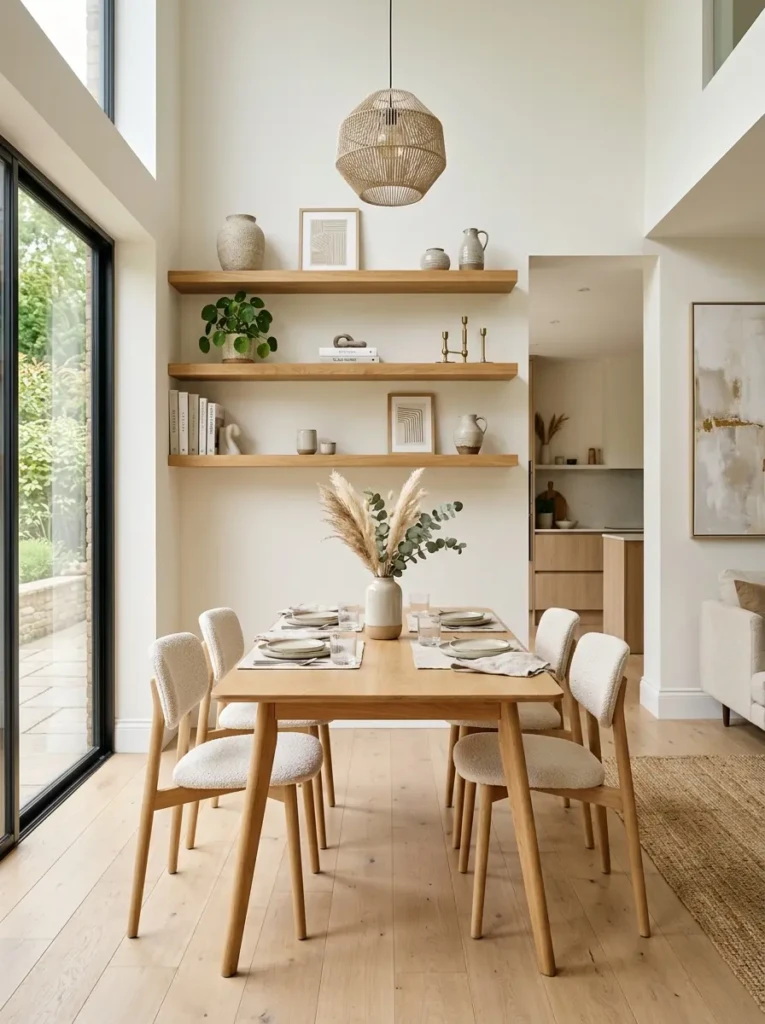
Dining spaces are no longer limited to tables, chairs, and a chandelier. Modern homeowners want dining rooms that feel functional, organized, and visually appealing. That is why dining room floating shelves have become one of the most popular interior design features in recent years. They provide storage without making the room feel crowded and help transform blank walls into stylish focal points.
Floating shelves work well in both small and large dining rooms because they create the illusion of openness. Unlike bulky cabinets, they offer storage while maintaining clean lines and airy visual balance.
How Floating Shelves Improve Dining Room Functionality
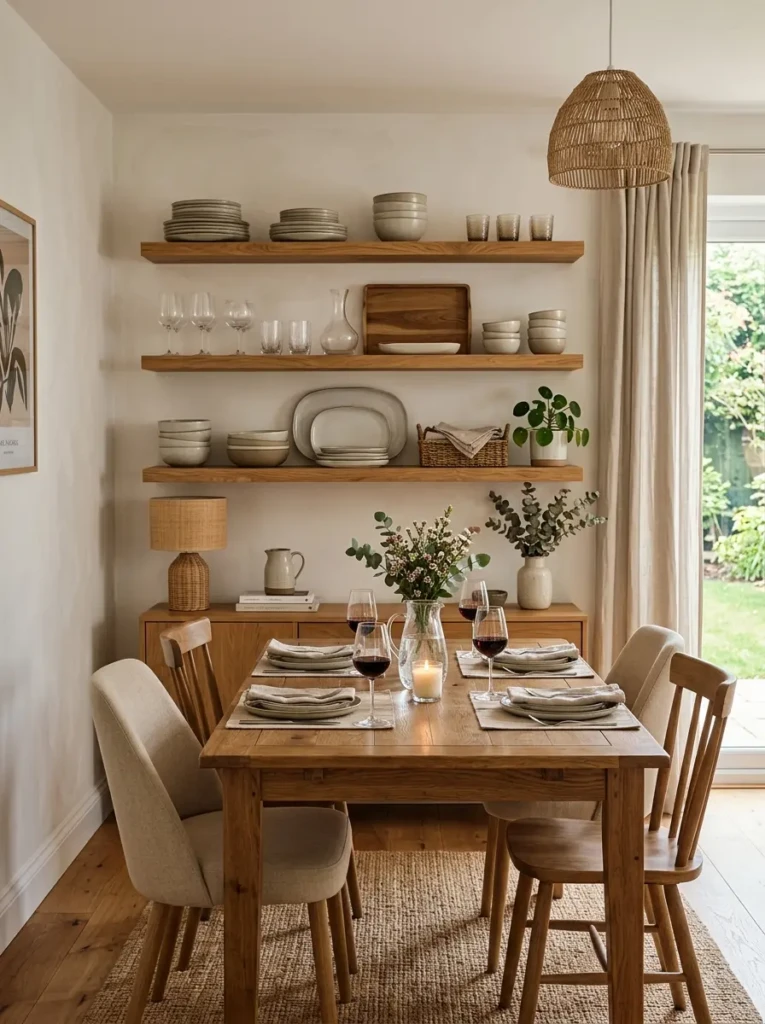
A dining room should support both everyday living and entertaining guests. Floating shelves help by adding accessible storage for frequently used items. Plates, bowls, serving trays, glasses, and decorative pieces can all be displayed in an organized manner.
Instead of storing everything behind closed doors, shelves allow you to keep attractive dining essentials within easy reach. This reduces clutter and improves the overall usability of the room.
Choosing the Right Material for Floating Shelves
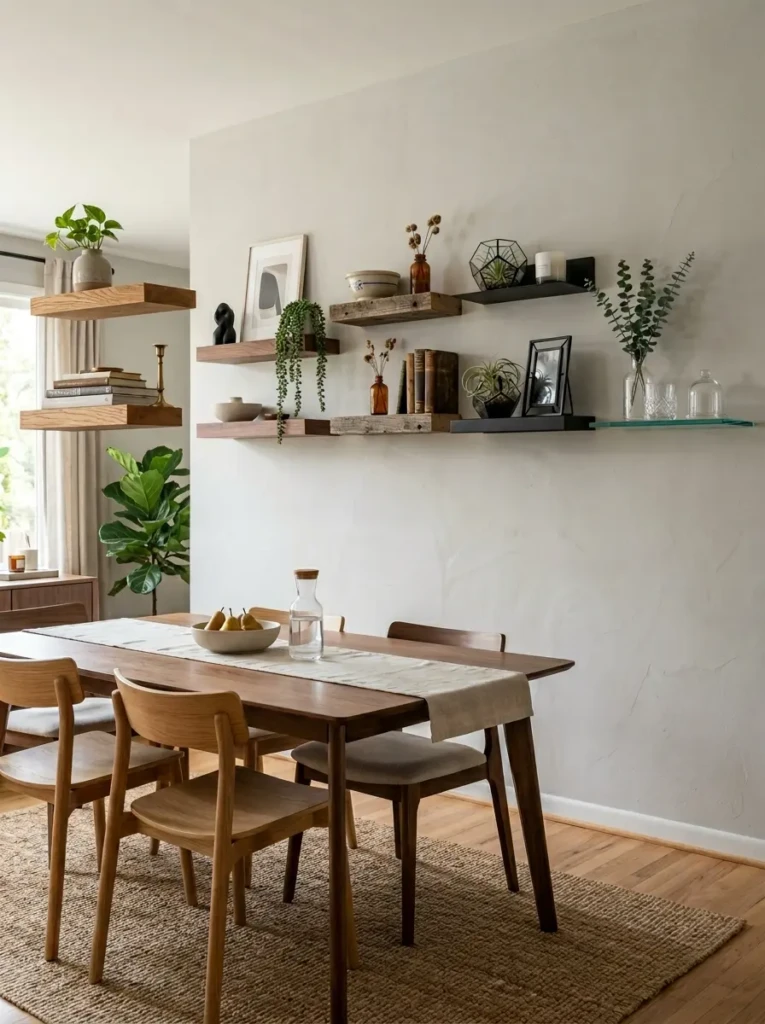
The material you choose significantly impacts the appearance and durability of your shelves. Wood remains the most popular option because it adds warmth and texture to dining spaces. Oak, walnut, and reclaimed wood are excellent choices for rustic or farmhouse interiors.
Metal shelves work better in industrial or contemporary spaces, while glass shelves can create a sleek and minimal aesthetic. Always choose materials that complement the dining table and existing furniture.
Best Placement Ideas for Dining Room Floating Shelves
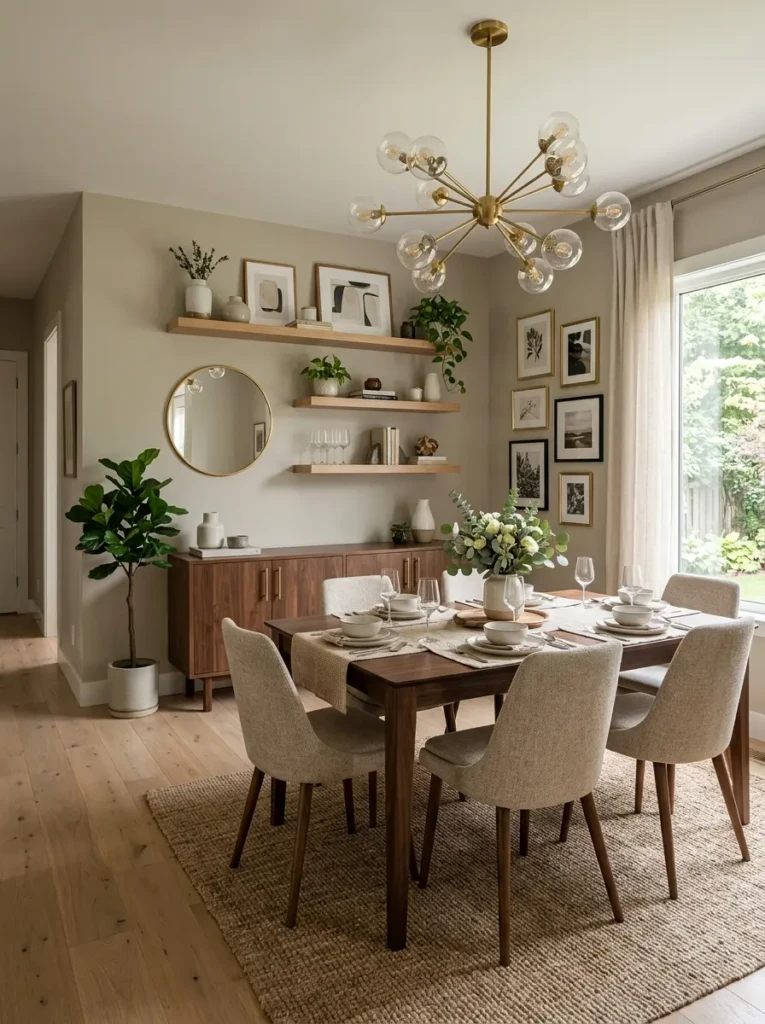
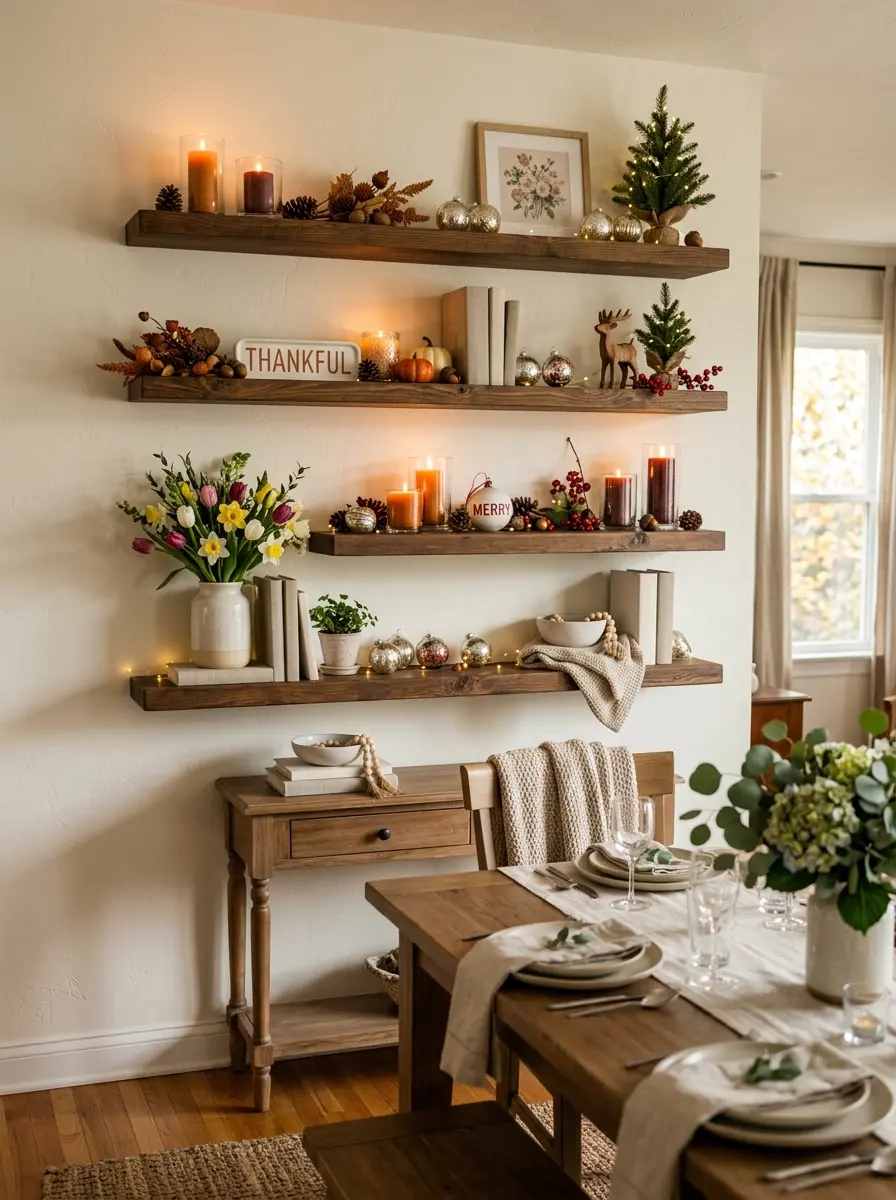
Proper placement is essential for achieving a balanced design. Many homeowners install floating shelves above a sideboard or buffet cabinet. This creates a layered look while maximizing wall space.
Another popular idea is placing shelves on an empty accent wall beside the dining table. Corner installations can also work well in compact dining rooms where every inch matters.
Styling Floating Shelves Without Overcrowding
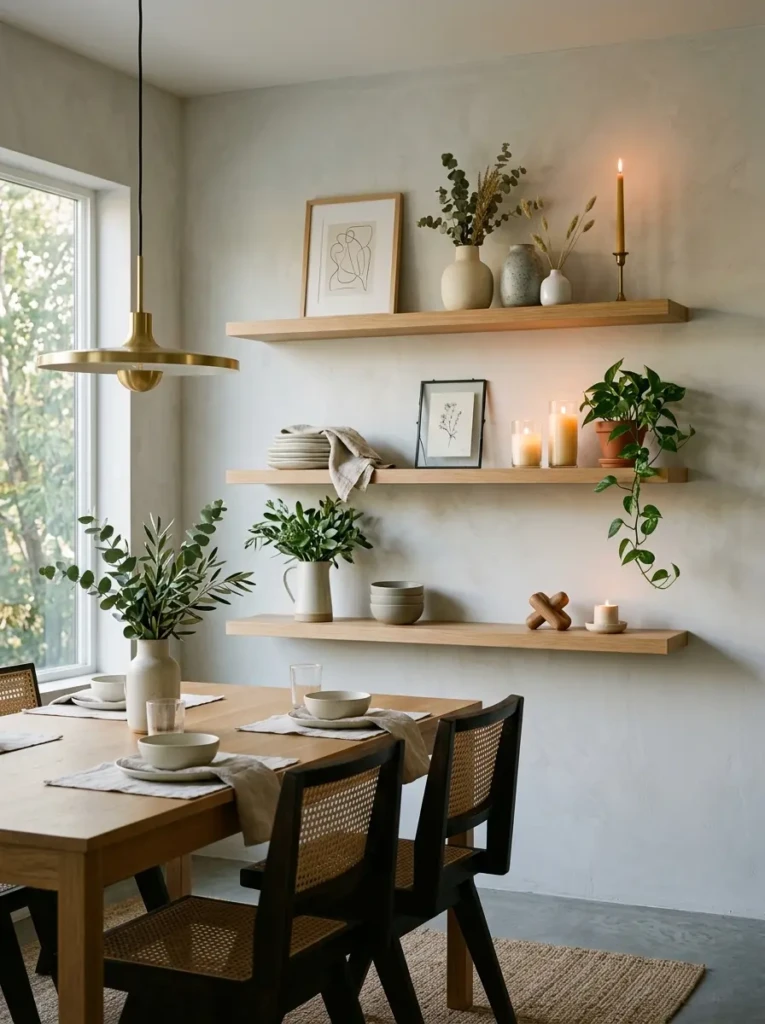
One common mistake is placing too many items on the shelves. A cluttered arrangement can make the dining room feel smaller and chaotic. Instead, focus on balanced styling.
Combine decorative objects with practical items. For example, stack a few ceramic plates beside a vase, candles, or framed artwork. Mixing heights, textures, and shapes creates visual interest while maintaining harmony.
Using Floating Shelves for Seasonal Decor
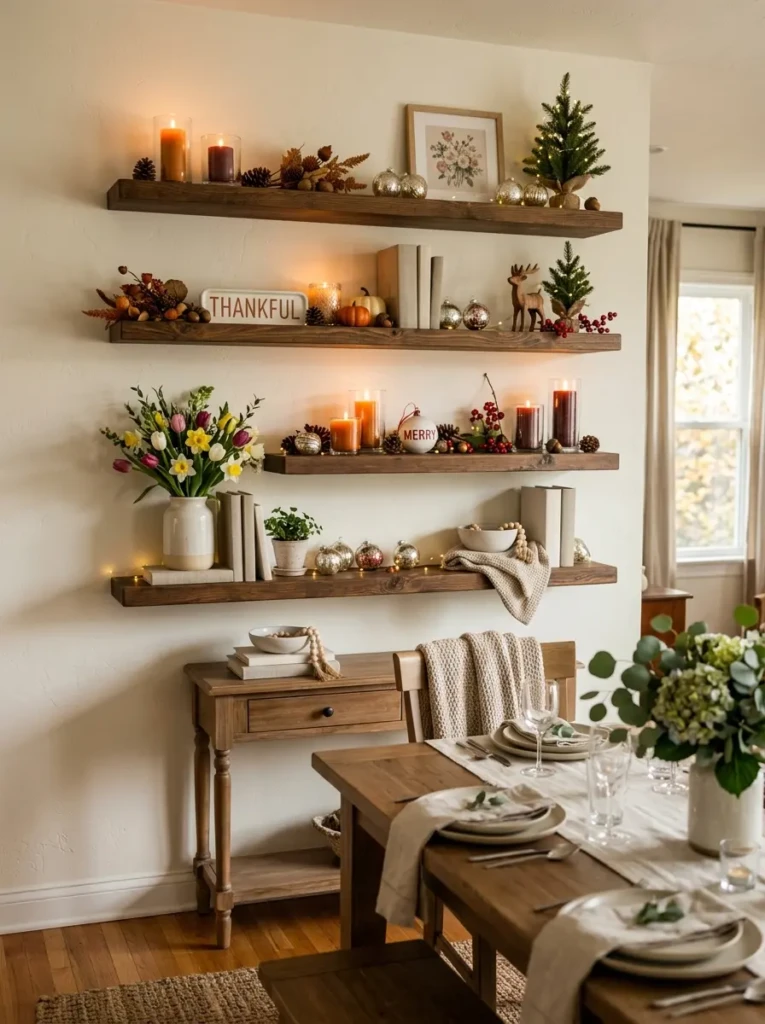
Dining rooms are often gathering spaces during holidays and celebrations. Floating shelves make it easy to update the decor throughout the year.
During spring, you can display fresh flowers and pastel accents. In autumn, warm-toned candles and rustic decor pieces create a cozy atmosphere. Winter holidays allow for festive ornaments and elegant serving pieces.
This flexibility keeps the dining room feeling fresh without requiring major design changes.
Small Dining Rooms Benefit the Most
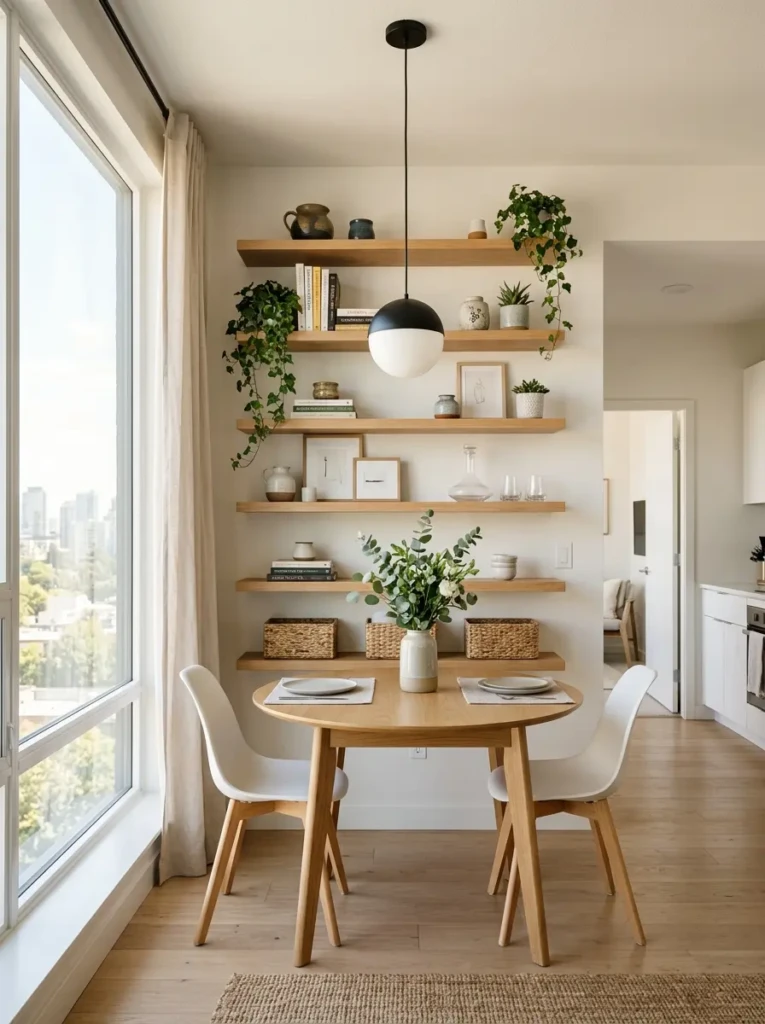
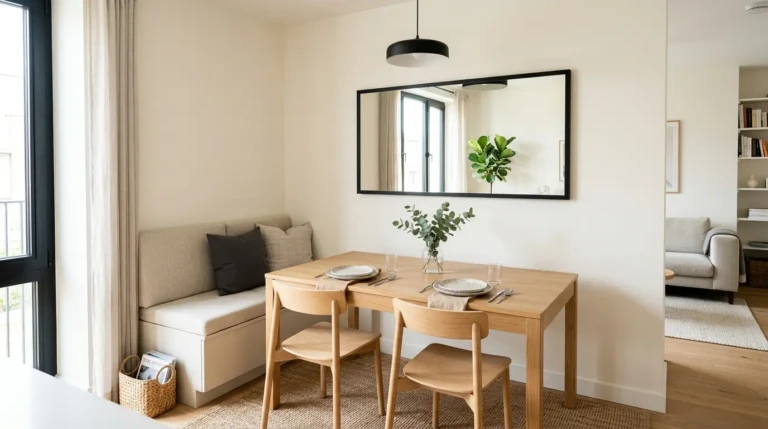
Limited square footage often makes storage difficult. Traditional cabinets can consume valuable floor space and make a room feel cramped. Floating shelves solve this problem by utilizing vertical wall areas.
In small dining rooms, open shelving creates a lighter appearance while still providing storage. Light-colored shelves paired with neutral walls can further enhance the feeling of spaciousness.
Matching Shelves With Your Interior Style
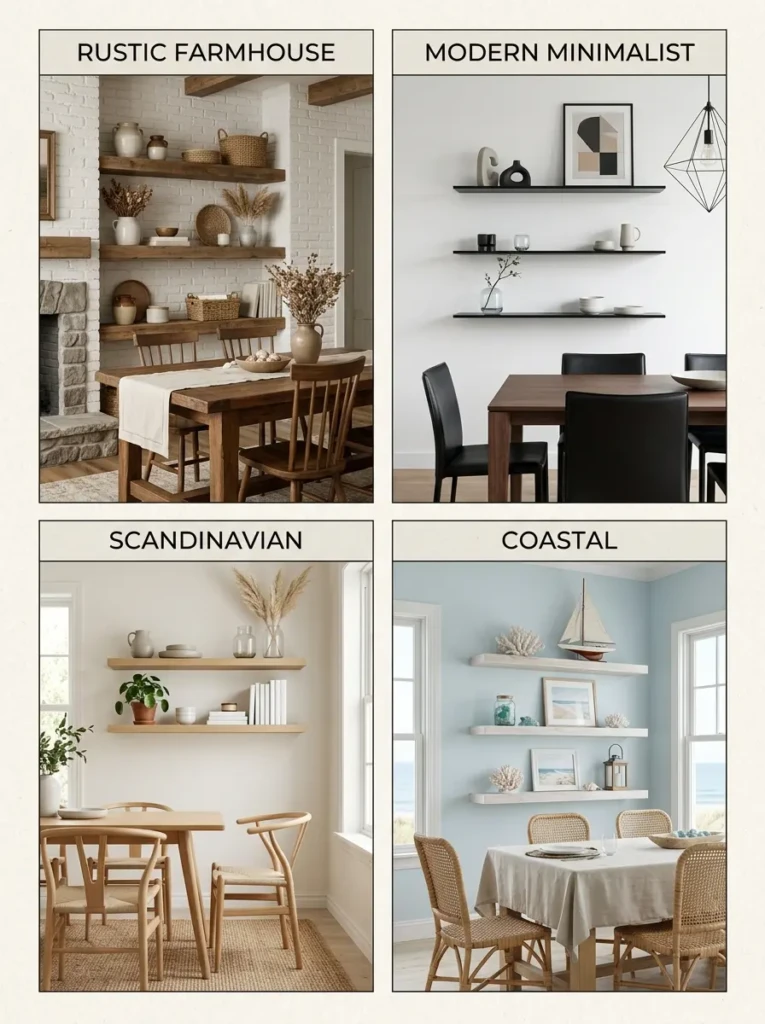
Floating shelves are versatile enough to fit almost every design style. Rustic interiors benefit from reclaimed wood shelves with natural finishes. Modern dining rooms look best with sleek shelves featuring hidden brackets and sharp edges.
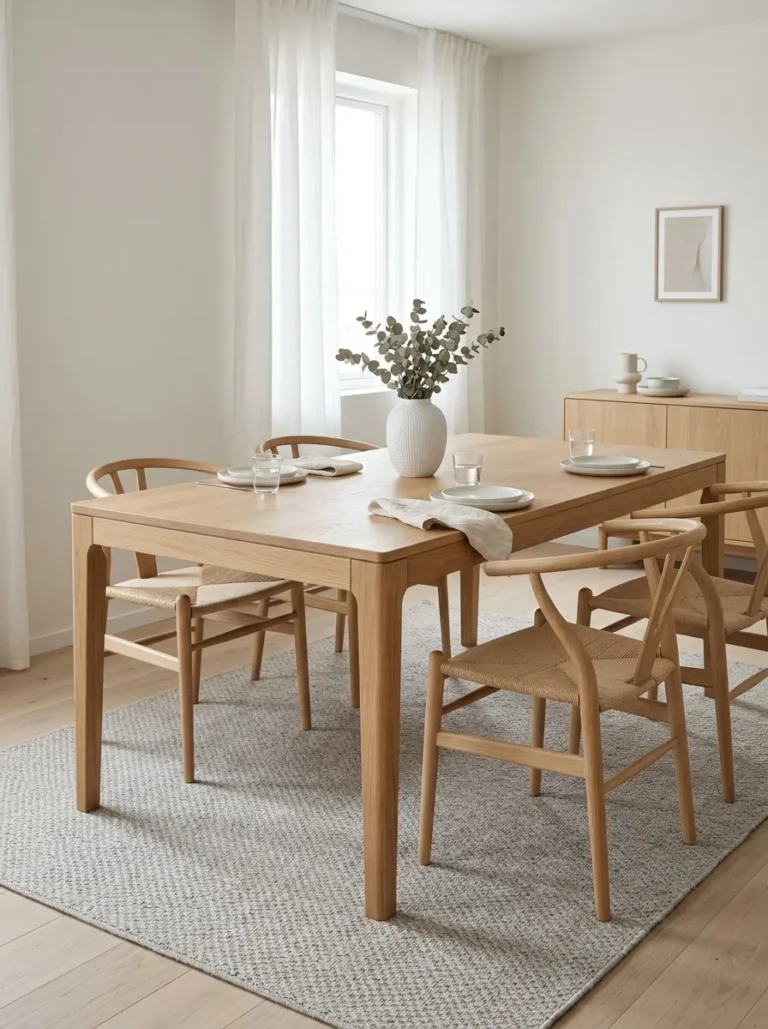
For Scandinavian interiors, choose simple wooden shelves with clean lines and minimal styling. Coastal-inspired spaces often use whitewashed wood combined with soft decorative accents.
Matching the shelves to the room’s existing style ensures a cohesive appearance.
The Importance of Proper Shelf Height
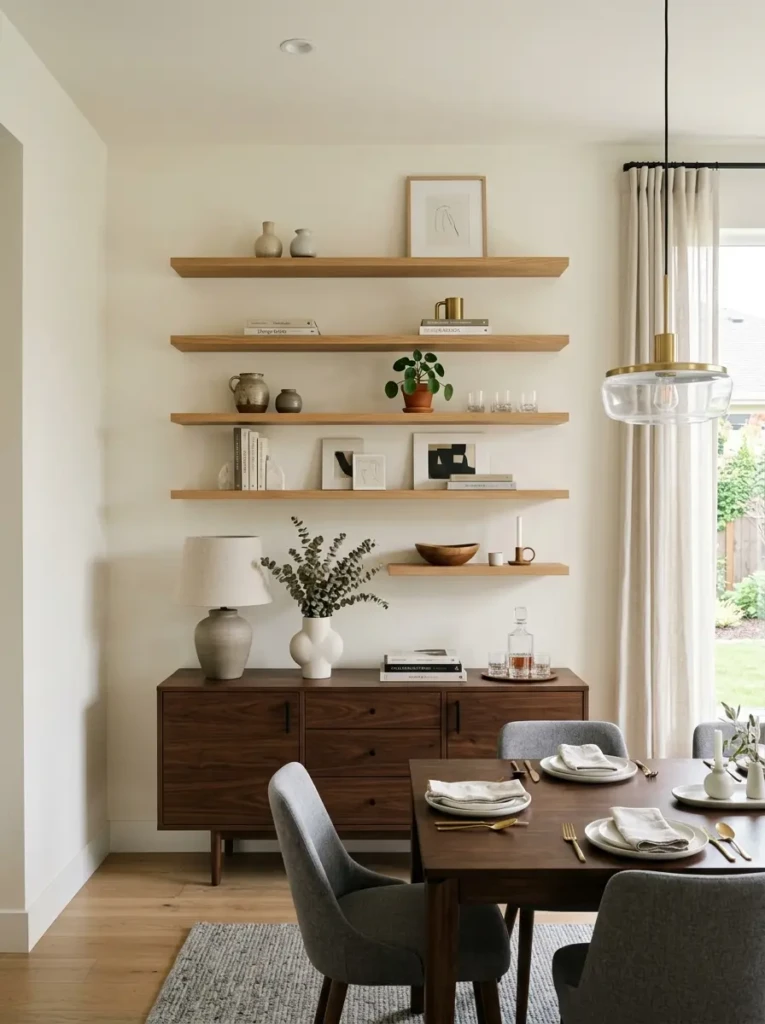
Shelf height affects both functionality and visual balance. Shelves placed too high may become difficult to access, while shelves installed too low can interfere with furniture placement.
Most designers recommend placing shelves approximately 18 to 24 inches above a buffet or sideboard. If shelves are installed on an empty wall, ensure they align proportionally with nearby furniture and artwork.
Correct spacing between multiple shelves also helps maintain a polished look.
Combining Art and Storage Together
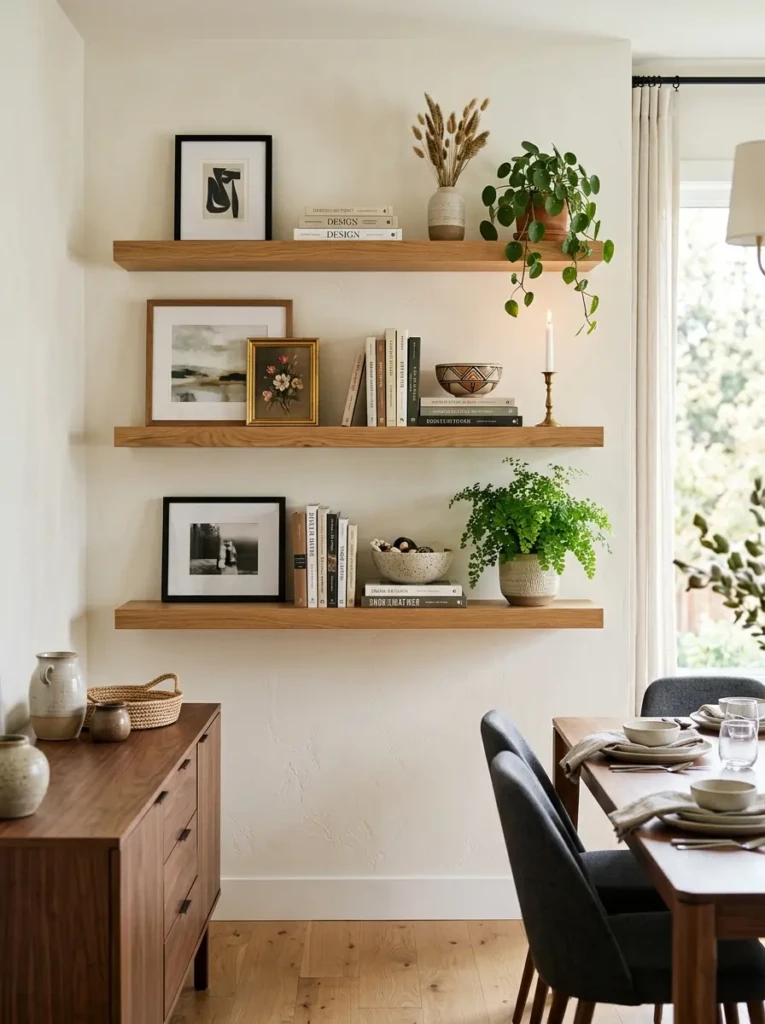
Floating shelves provide an excellent opportunity to combine practical storage with artistic display. Many homeowners mix framed prints, decorative bowls, plants, and books on their shelves.
This layered approach creates personality within the dining room. Instead of using shelves solely for storage, they become part of the overall design statement.
Adding artwork behind or beside the shelves can further enhance the visual depth of the wall.
Lighting Can Enhance Shelf Displays
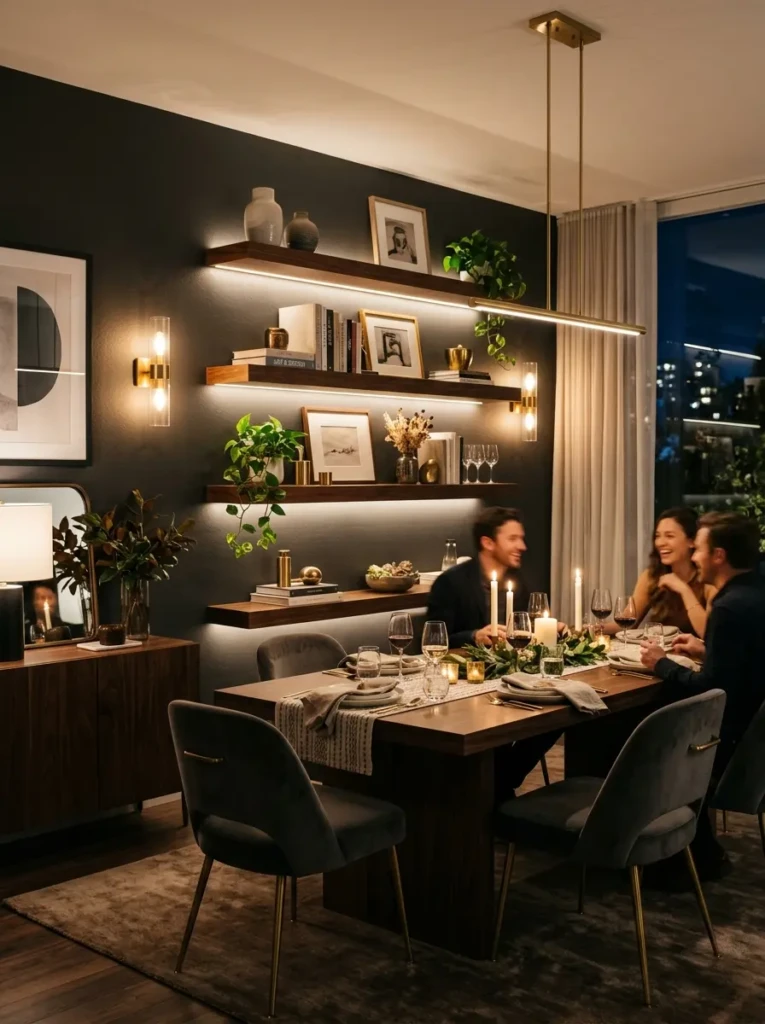
Good lighting can dramatically improve the appearance of floating shelves. Wall sconces, pendant lighting, or LED strip lights beneath the shelves create warmth and highlight decorative pieces.
Soft lighting also adds ambiance during dinners and gatherings. In modern dining rooms, integrated shelf lighting creates a sophisticated and luxurious effect.
When selecting lighting, focus on warm tones that complement the dining environment rather than harsh white light.
Floating Shelves Create Better Visual Flow
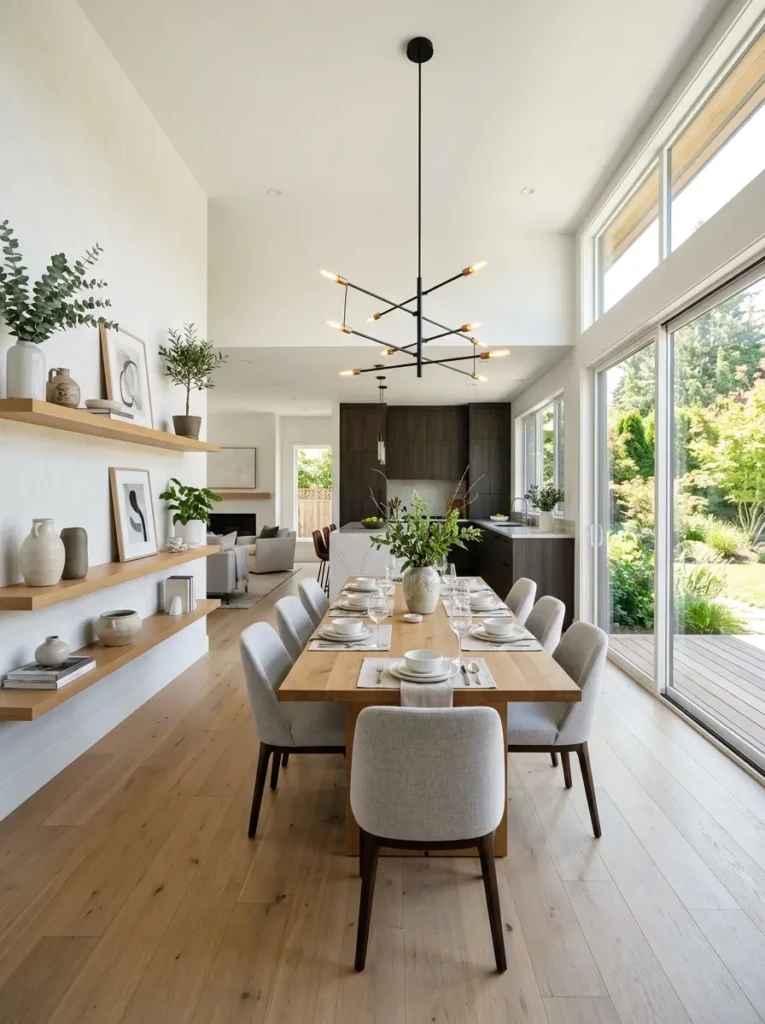
Heavy furniture can sometimes make dining rooms appear overly formal or crowded. Floating shelves reduce visual weight because they do not extend to the floor.
This creates better flow within the room and helps maintain an open atmosphere. Homes with open-concept layouts particularly benefit from this effect because shelves define the dining area without blocking sightlines.
The result is a dining space that feels connected, modern, and welcoming.
Practical Storage Ideas for Dining Room Shelves
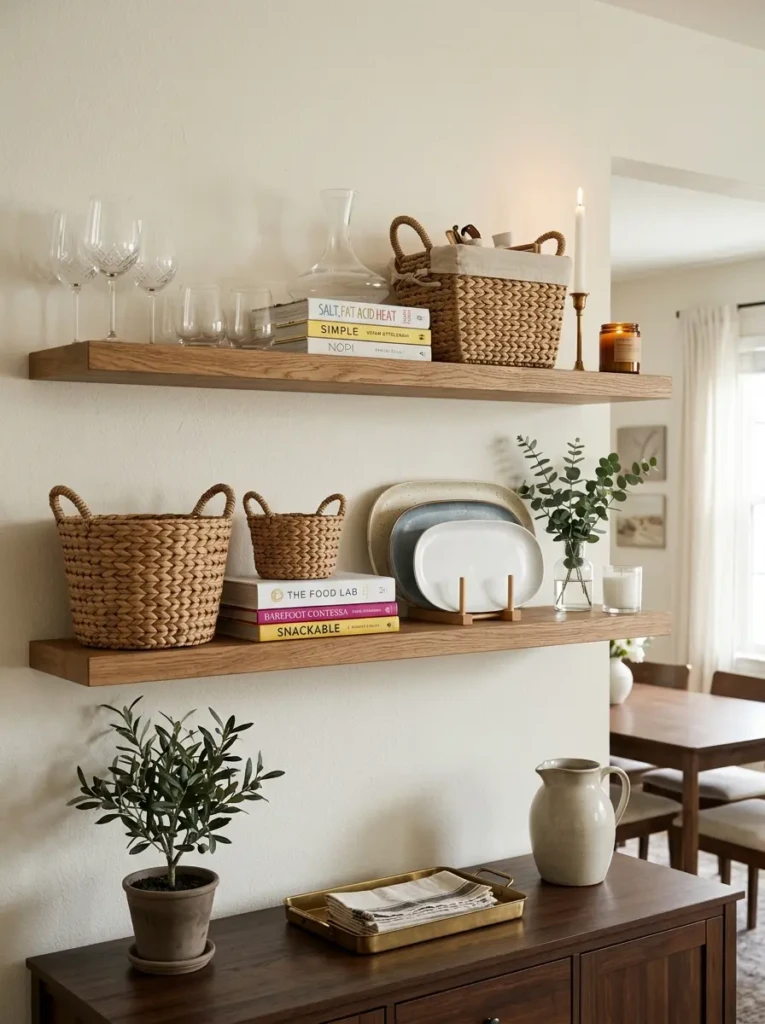
Floating shelves are not just decorative features. They can also improve organization in practical ways. Common storage ideas include:
- Wine glasses and bar accessories
- Ceramic dinnerware
- Serving platters and bowls
- Cookbooks
- Decorative baskets
- Plants and candles
Using baskets or containers can help hide smaller items while maintaining a clean appearance.
Maintaining Floating Shelves Over Time
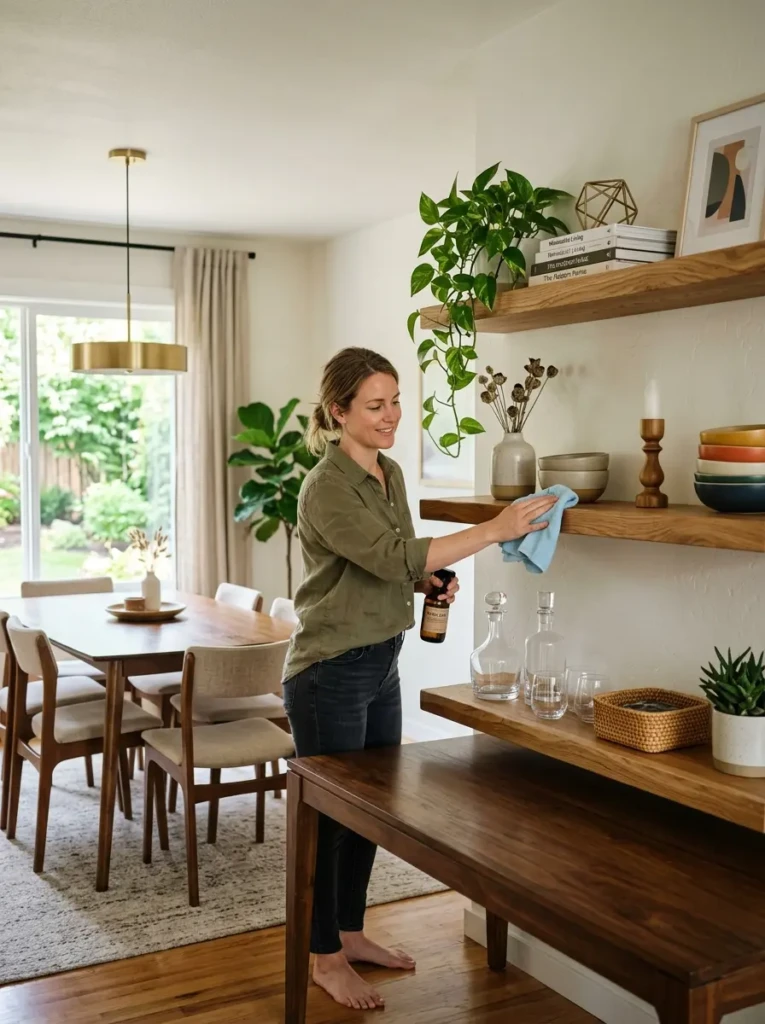
Like any furniture piece, floating shelves require regular maintenance. Dust accumulation can become noticeable, especially on dark-colored surfaces. Wiping shelves weekly keeps them looking clean and polished.
Wood shelves may occasionally require conditioning or refinishing depending on the finish type. Always avoid overloading shelves beyond their weight capacity to prevent structural issues.
Proper installation using strong anchors is also essential for long-term durability and safety.
Mixing Open Shelving With Closed Storage
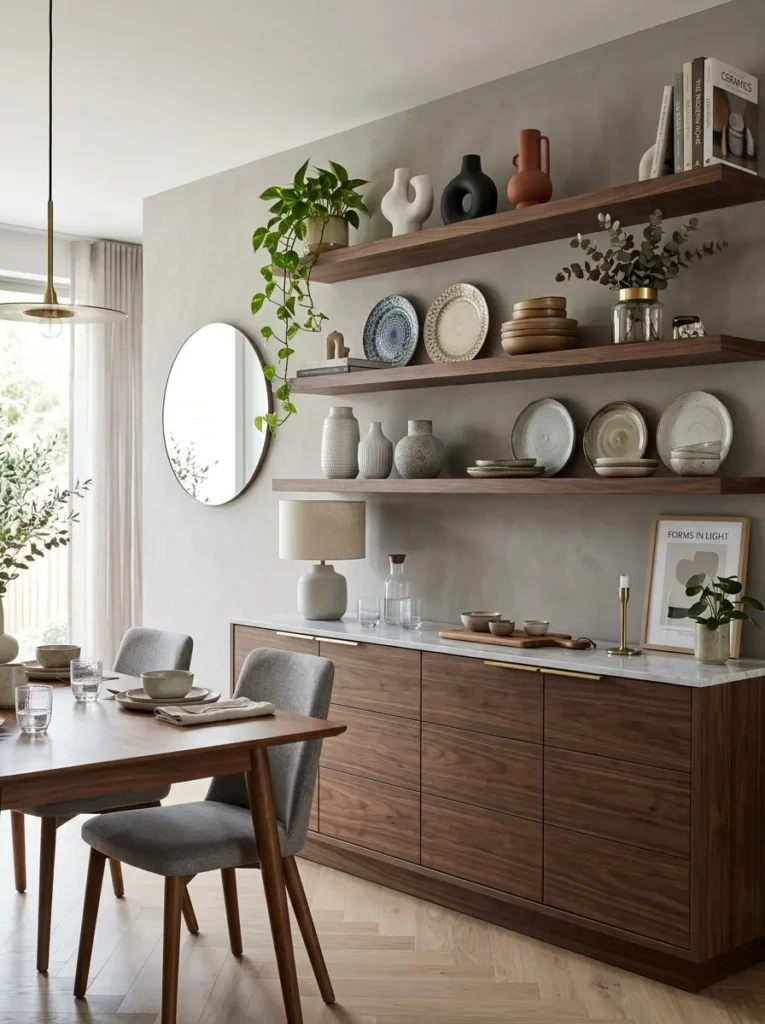
Some homeowners hesitate to use floating shelves because they worry about visible clutter. A balanced solution is combining open shelving with closed storage furniture.
For example, a buffet cabinet below the shelves can store less attractive or rarely used items, while the shelves display decorative and frequently used pieces. This combination offers both style and practicality.
The contrast between open and closed storage also adds depth to the room design.
Popular Color Choices for Dining Room Shelves
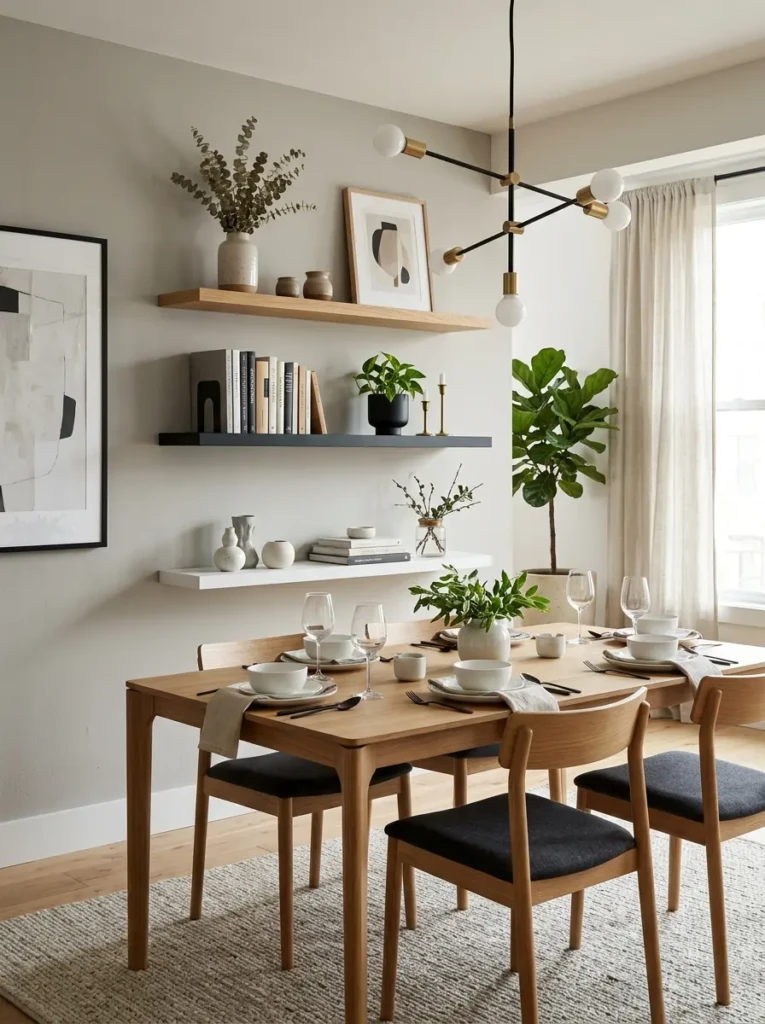
Color selection plays a major role in shelf design. Natural wood tones remain timeless because they blend with various interiors. Black shelves create dramatic contrast in modern dining rooms, while white shelves provide a clean and airy appearance.
Some homeowners choose shelf colors that match the dining table, while others use contrasting tones for visual impact. Matte finishes are especially popular because they create a refined and contemporary look.
Custom Floating Shelves Offer More Flexibility
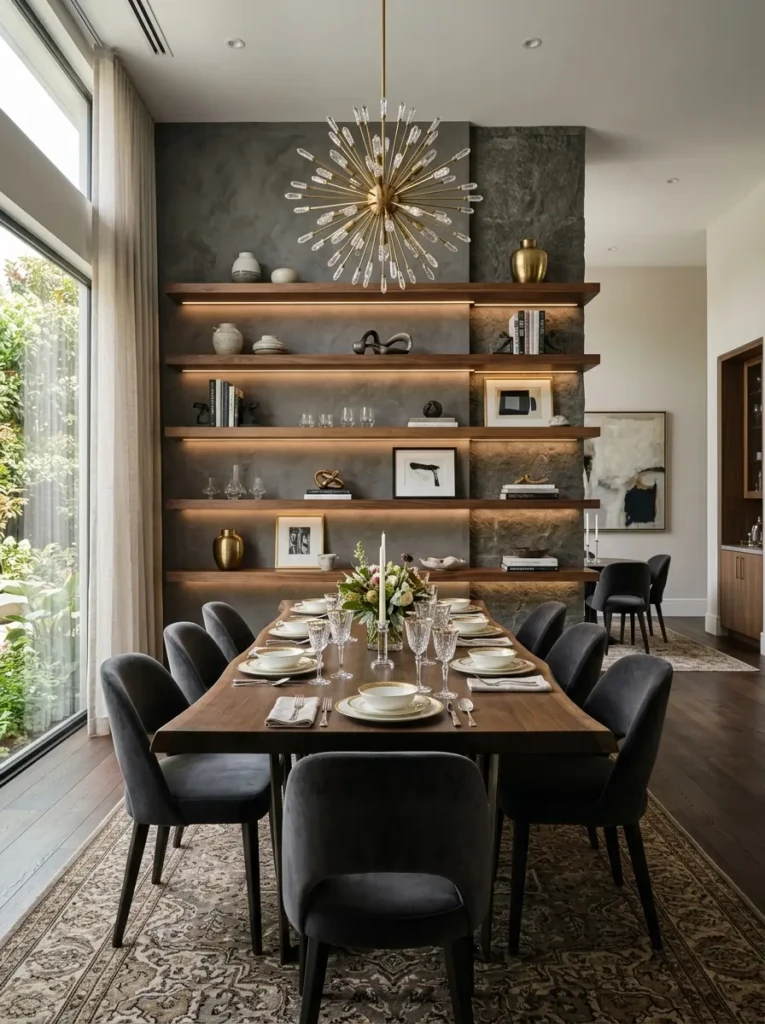
Custom shelves allow homeowners to maximize difficult spaces and achieve a tailored appearance. Built-to-measure shelving works particularly well in narrow dining rooms or homes with unique wall dimensions.
Custom options also provide flexibility in terms of thickness, finish, and bracket style. While they may cost more than prefabricated shelves, the final result often feels more integrated and high-end.
Final Thoughts on Dining Room Floating Shelves
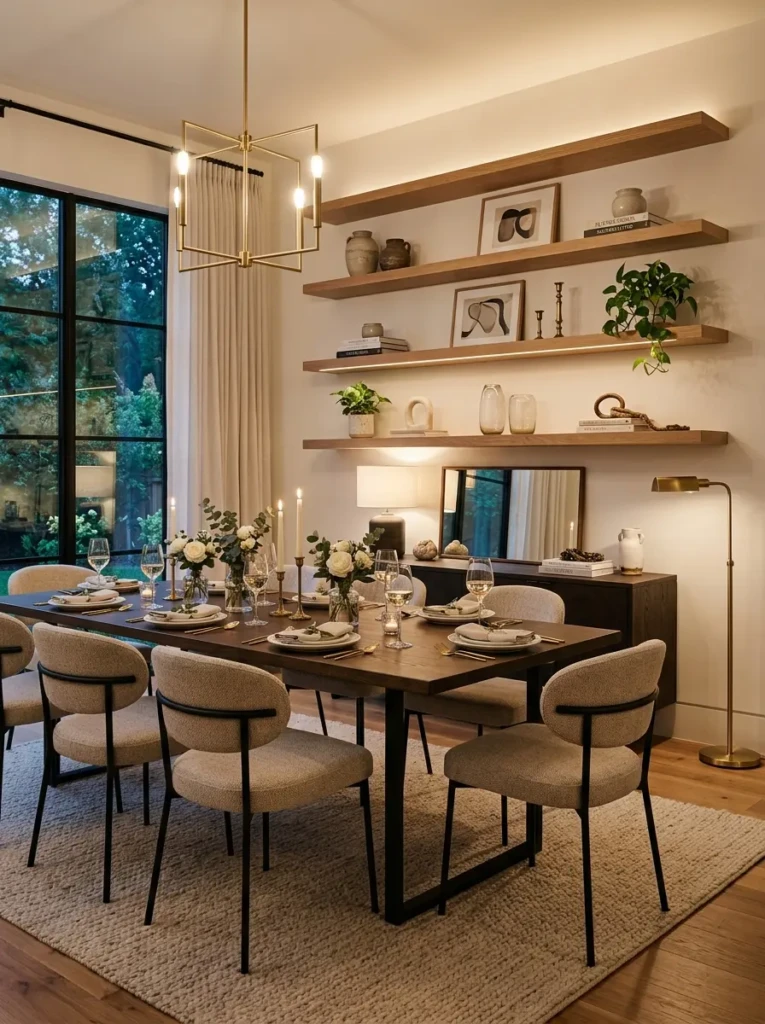
Adding floating shelves to a dining room is one of the simplest ways to improve both storage and style. They create visual interest, enhance organization, and make the room feel more open and inviting.
Whether your home features a rustic farmhouse aesthetic or a sleek modern interior, floating shelves can adapt beautifully to the space. With thoughtful placement, balanced styling, and quality materials, dining room floating shelves can transform an ordinary dining area into a functional and elegant centerpiece of the home.